
Energy
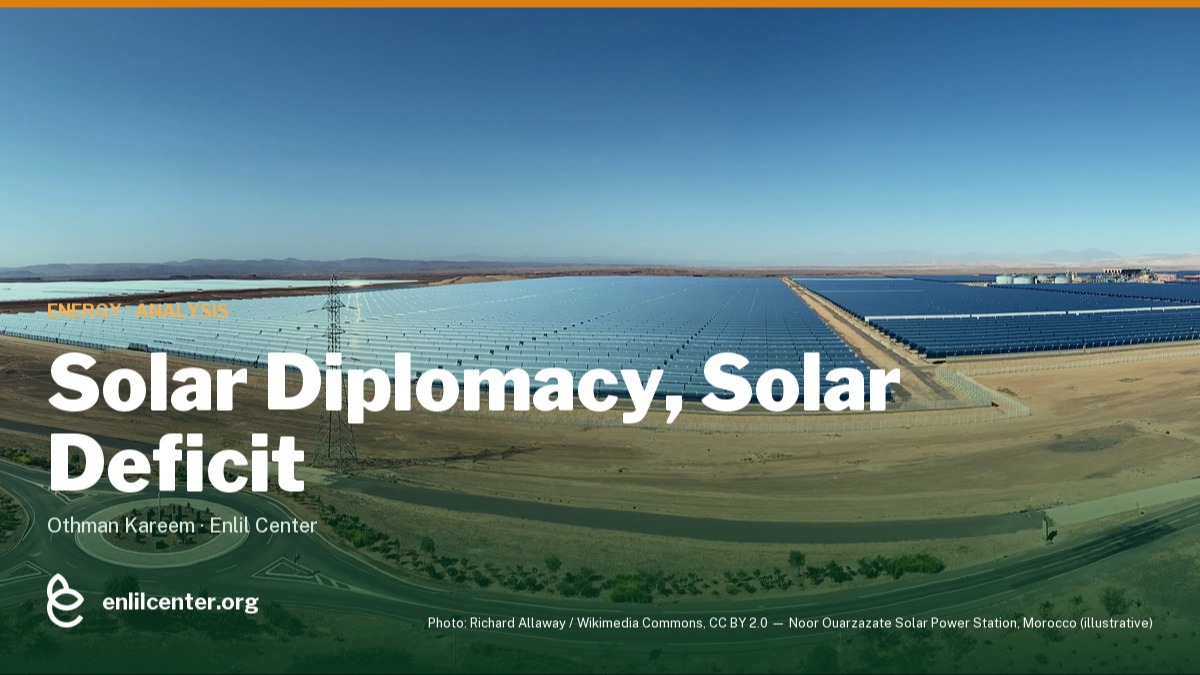
Solar Diplomacy, Solar Deficit
Iraq is joining a 112-country solar alliance while renewables supply just 3.8% of its electricity. Enlil traces what membership can and cannot fix.
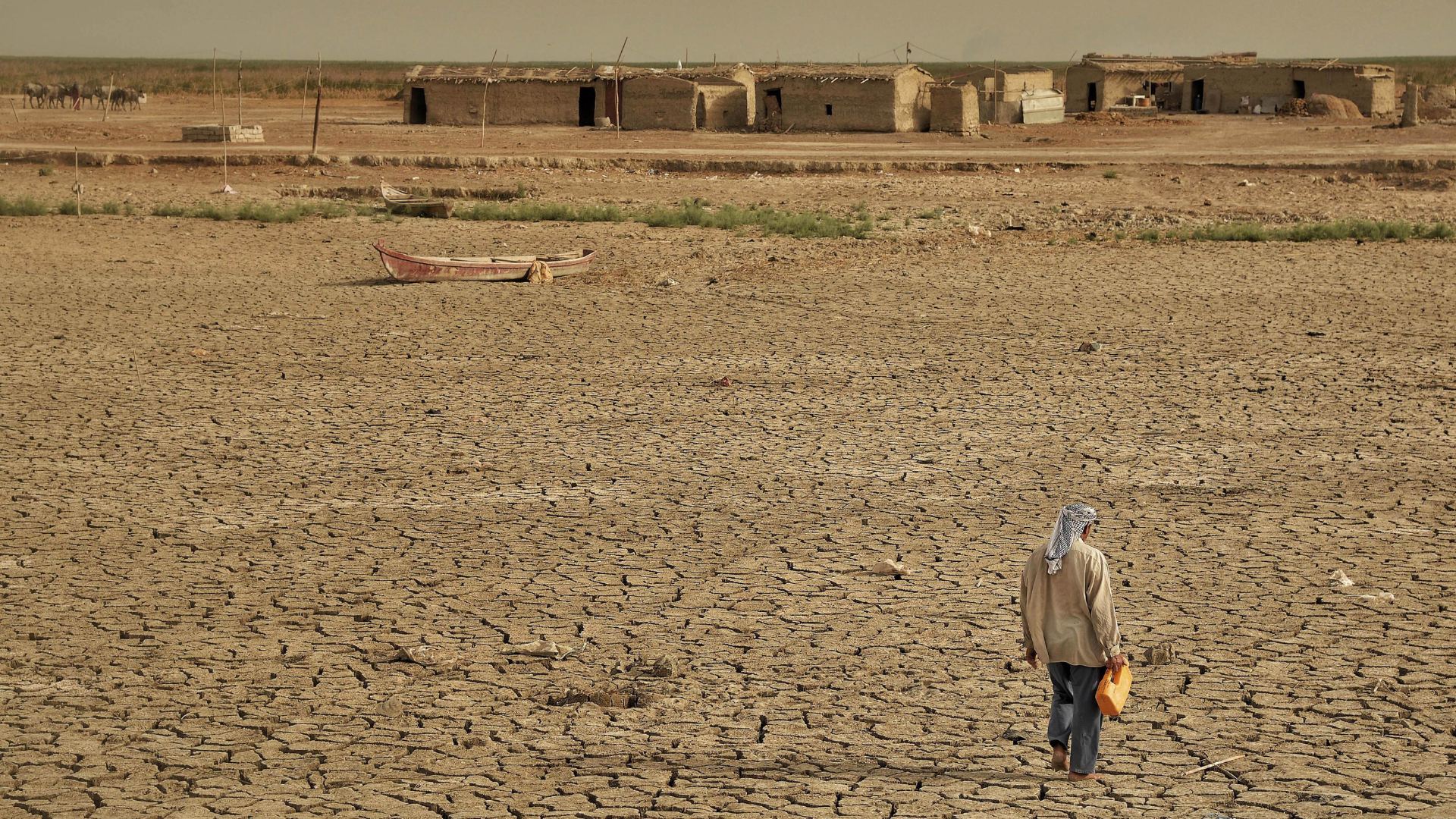
Iraq goes to the UN climate conference in Antalya with a new climate plan priced at US$72.2 billion, most of it conditional on outside money, and without the national adaptation plan it began in 2020. The finance on the table in Antalya is real but small and slow. What Iraq can realistically take home is a stronger position on adaptation finance, regional partners and a test of its own credibility on gas flaring.
Enlil Center is an independent, non-profit think tank in Baghdad. We produce research, policy analysis and open data across five pillars — climate, water, energy, economy and governance — so decisions about Iraq's future rest on facts, not assumptions.
Every article, report and dataset is tagged to at least one pillar, so you can follow a subject across everything we publish.
Heat, drought, dust and the adaptation Iraq cannot postpone.
02The Tigris–Euphrates basin, upstream dams and a shrinking share per person.
03Oil dependence, the electricity gap and the case for renewables.
04Diversification, jobs and the public finances behind every reform.
05Institutions, accountability and the rules that turn plans into outcomes.
Iraq is joining a 112-country solar alliance while renewables supply just 3.8% of its electricity. Enlil traces what membership can and cannot fix.
Iraq charges students and researchers for official data under budget-law fee powers dating from 2016, while its right-to-information bill stalls in Parliament. Enlil Research Unit traces the instruments and sets out five fixes.
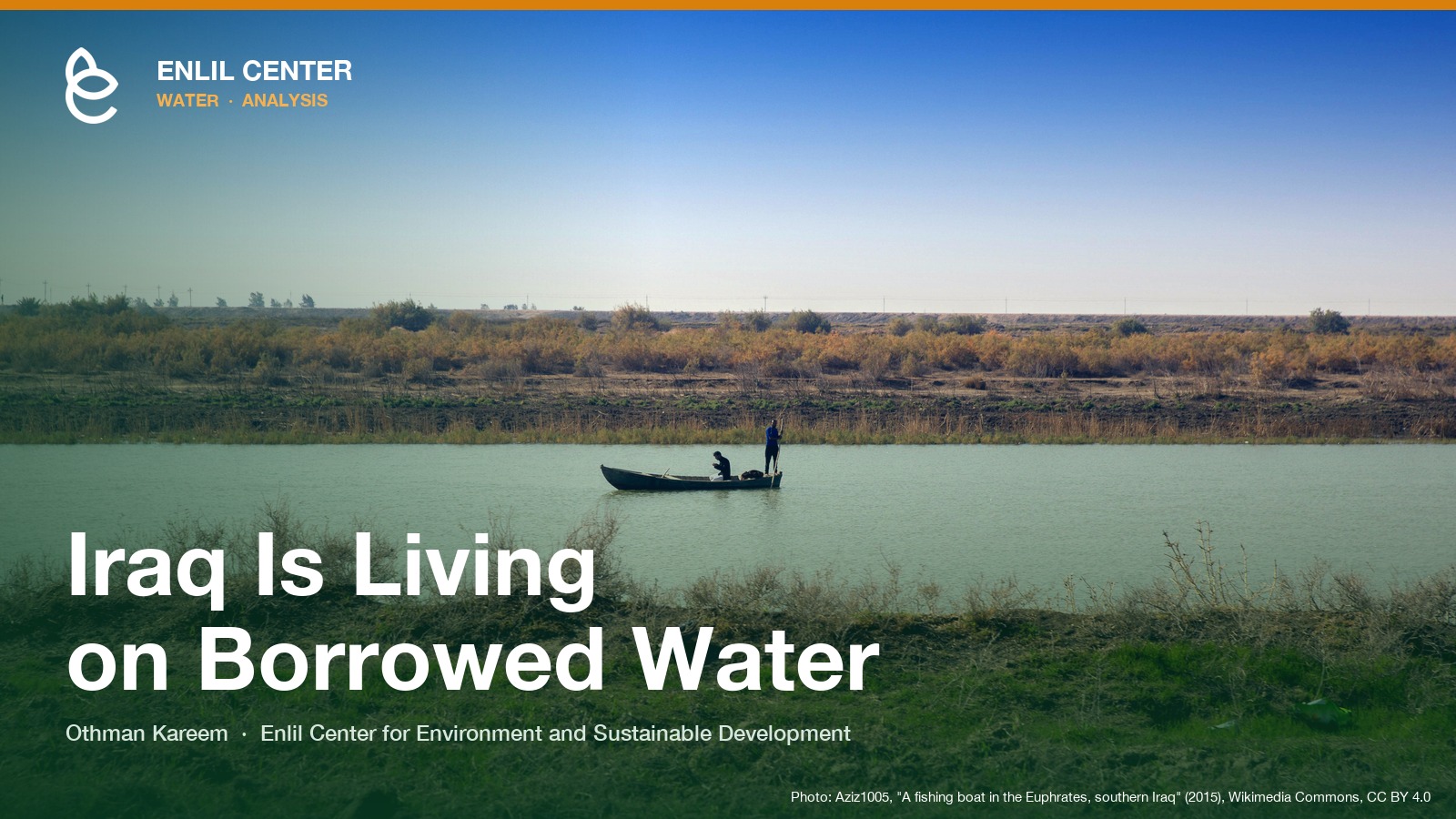
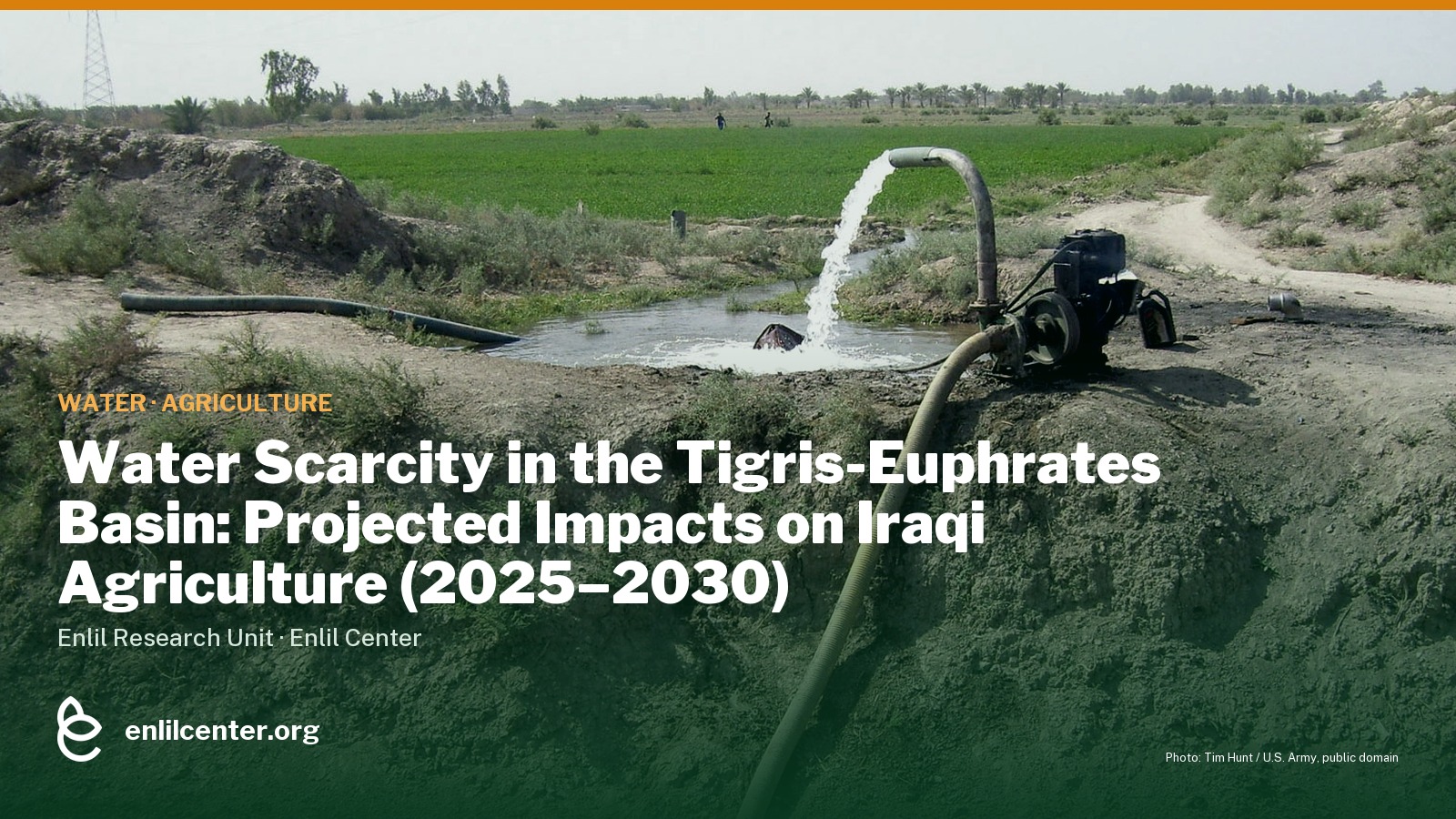
Iraq withdraws 120% of its internal renewable freshwater and has fallen below the 1,000 m³ per person scarcity line. Enlil Center sets out the evidence and four policy priorities.
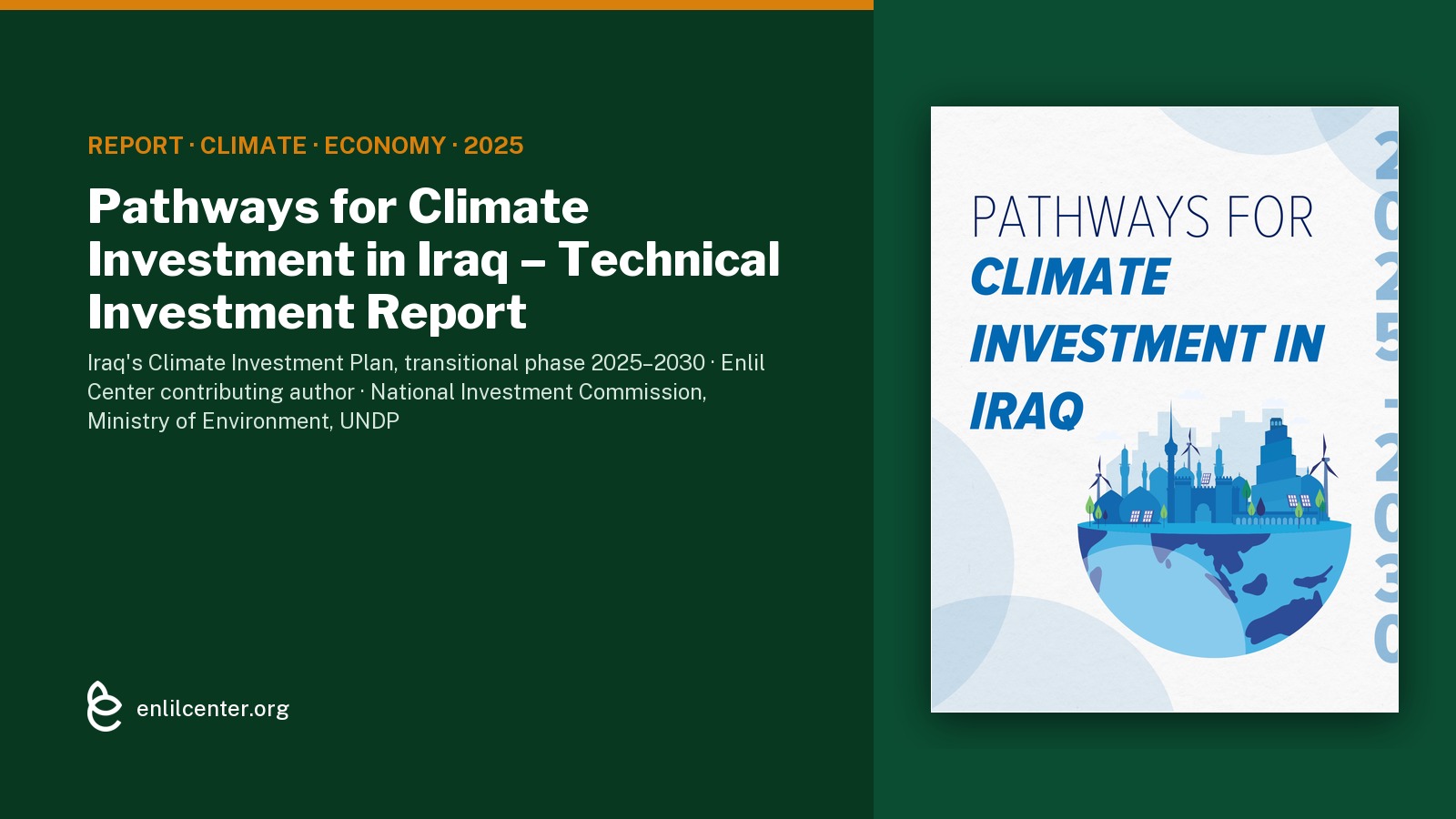
The technical report behind Iraq's first Climate Investment Plan: US$82.85 billion of sector-by-sector investment need to 2030, a measured 2021 emissions baseline, and five funding streams. Othman Kareem of Enlil Center, working as a consultant to UNDP, was a contributing author.
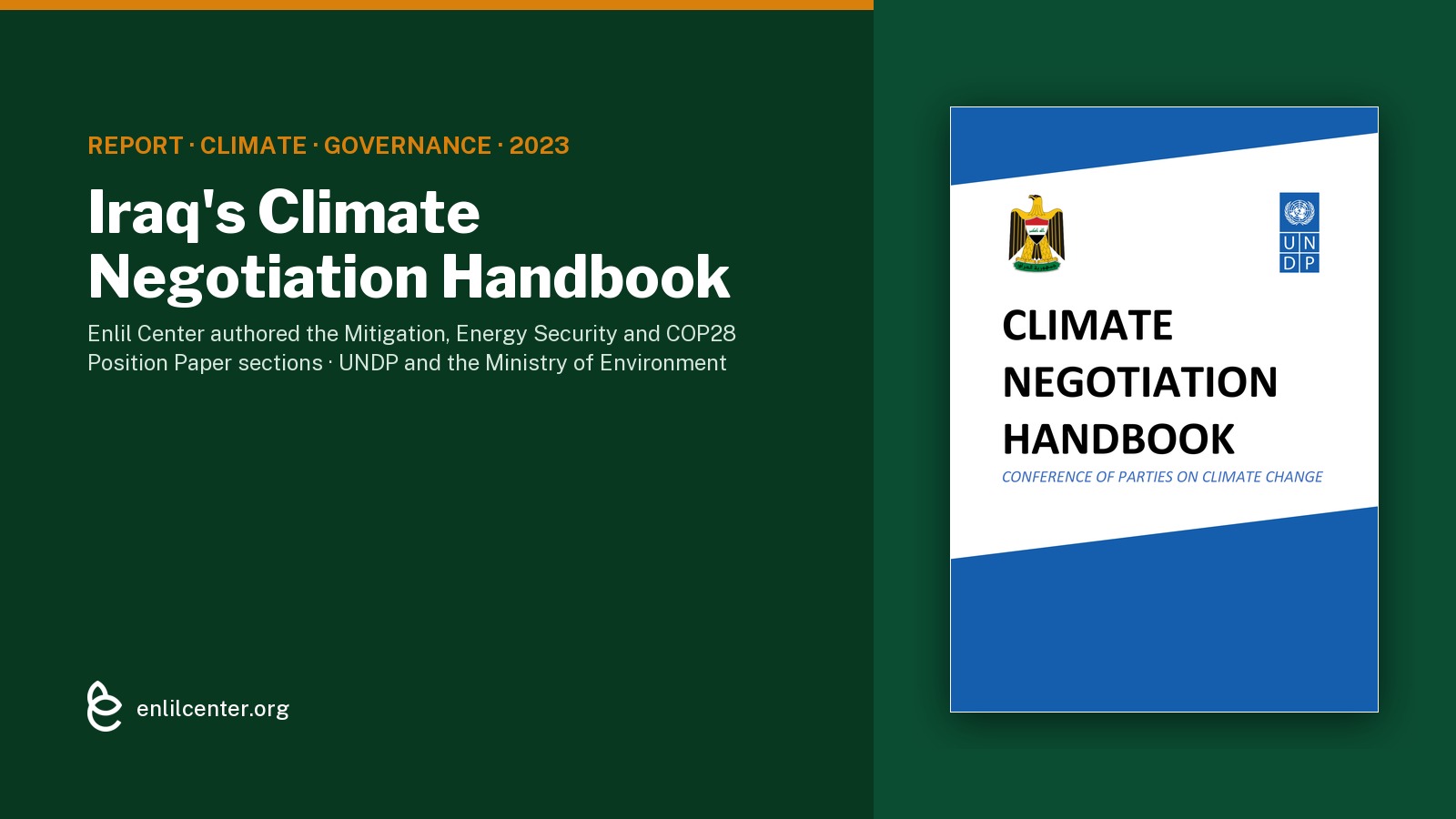
Iraq's 333-page negotiating handbook for COP28, prepared with UNDP and the Ministry of Environment. Enlil Center authored its Mitigation chapters, the Energy Security brief and the COP28 Position Paper.
Iraq's energy, water and climate policy, read from the official record. The week's cabinet decisions, ministry statements and data, every item sourced, with one line on why it matters.
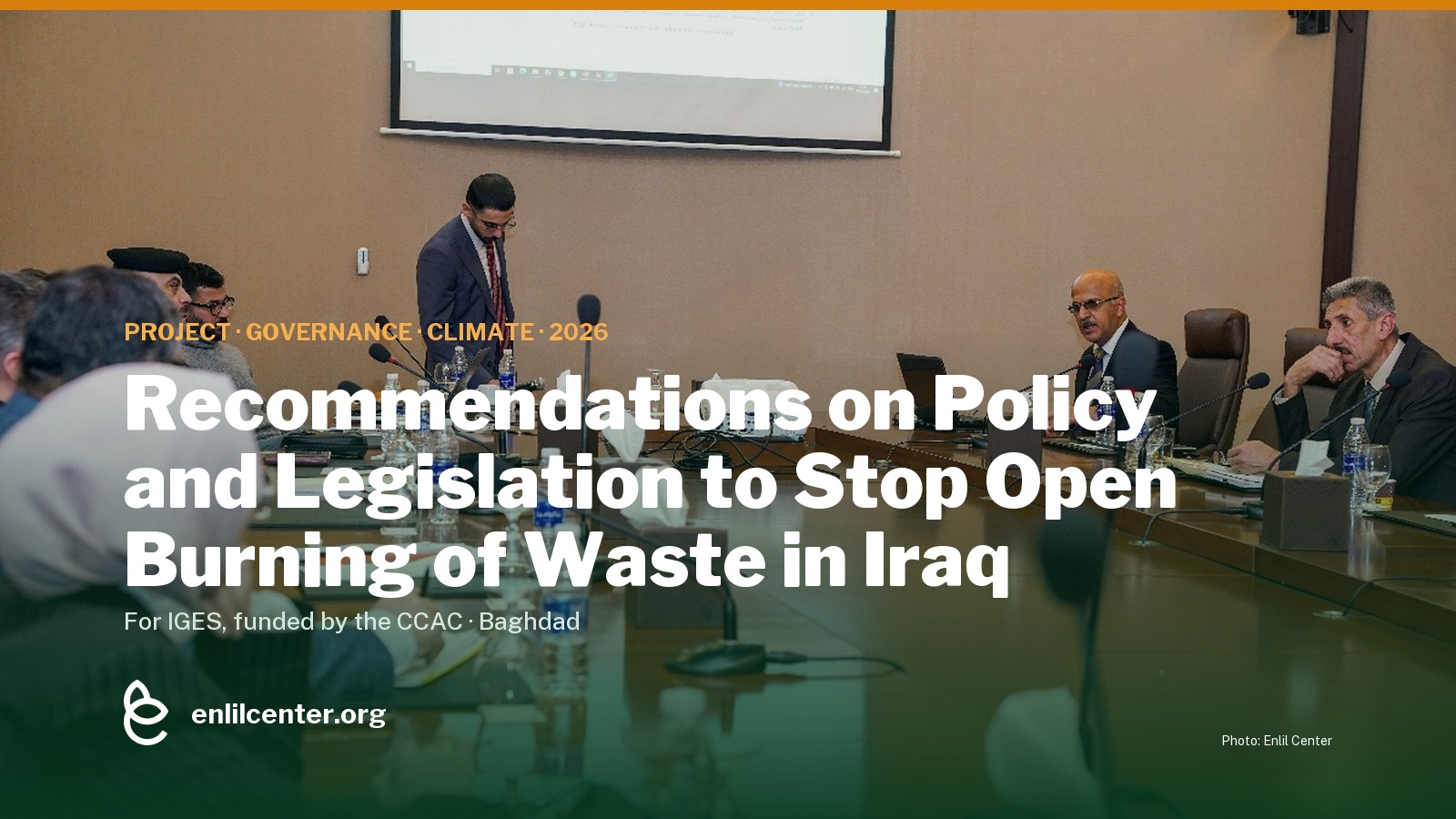
Enlil Center is the national partner to IGES and the Climate and Clean Air Coalition on policy and legislative recommendations to end open waste burning in Iraq — stakeholder consultations, governance analysis and a proposed Iraq Waste Framework reviewed with the Ministry of Environment.
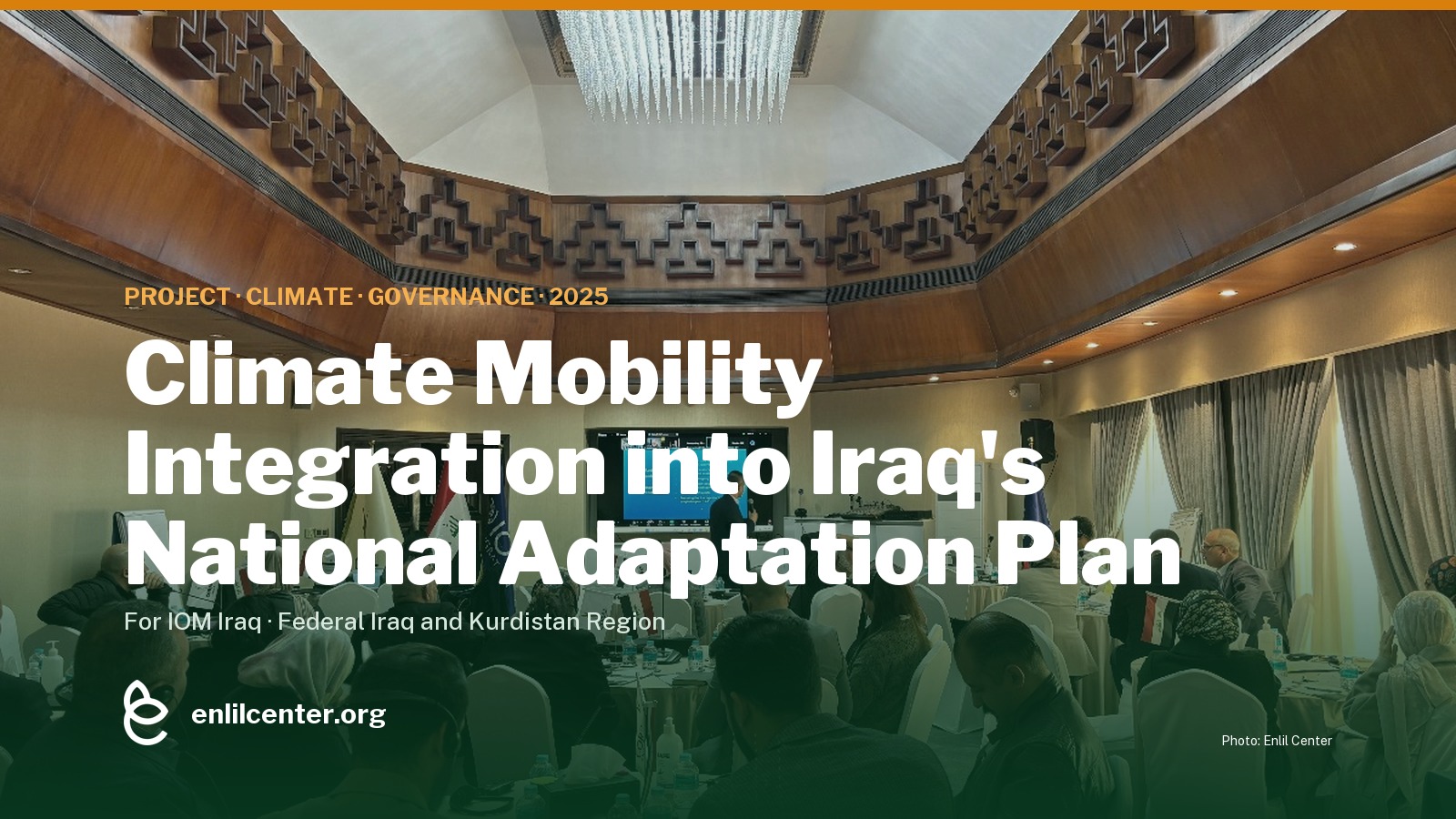
Enlil Center led the field research and technical writing for the Climate Mobility Chapter of Iraq's National Adaptation Plan for IOM Iraq — interviews, focus groups and field visits across Federal Iraq and the Kurdistan Region, now part of Iraq's UNFCCC submission.
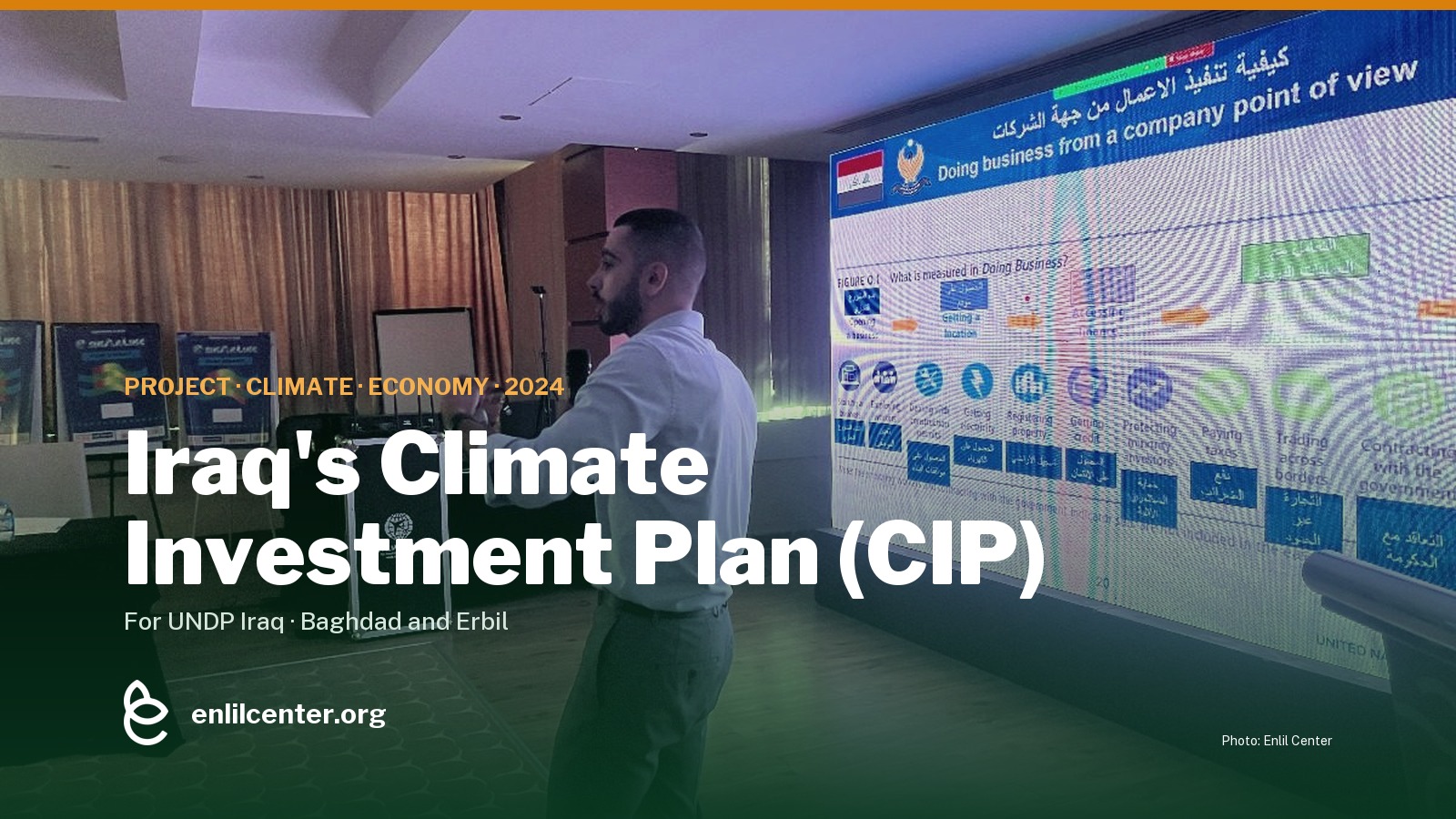
As consultant to UNDP Iraq in 2024, Enlil Center mobilised ministry data, drafted the mitigation and finance sections and trained the 14-ministry committee on Article 6 carbon markets for Iraq's US$82.85 billion Climate Investment Plan.
The Enlil Center for Environment and Sustainable Development is a non-profit, non-partisan research center and think tank based in Baghdad, Iraq. We started with climate and environment; today our work spans the five pillars that decide whether Iraq's next decade is resilient or reactive.
We conduct applied research, publish policy analysis, maintain an open data hub, and convene Iraqi institutions, civil society and international partners around evidence. Our aim is simple: that the people shaping Iraq's future — in ministries, parliament, universities, businesses and newsrooms — can reach for Iraqi evidence first.
We are named for Enlil, the Mesopotamian god of wind and storms, whose temple stood at Nippur in what is now Iraq — a reminder that this land has weathered change for six thousand years.
"Bridging rigorous research with practical, locally anchored solutions for a more resilient, prosperous Iraq."
Organisations that support our mission through funding, collaboration and long-term partnership.
 Al-Bayan Center
Research partner
Website
 Iraq Energy Institute
Research partner
Website
 UNDP Iraq
Sponsor · Climate Investment Plan (2024) · Climate Negotiation Handbook (2023)
View project
 GIZ Iraq
Sponsor · Renewable energy assessment for Anbar's public infrastructure (2024)
View project
 Morshed Group
Partner
Website
 IOM Iraq
Sponsor · Climate Mobility Chapter, National Adaptation Plan (2025)
View project
 IGES
Sponsor · Policy recommendations to stop open burning of waste (2026)
View project
 CCAC
Funder · Policy recommendations to stop open burning of waste (2026)
View project
 WEE Pros
Contracting partner · Renewable energy assessment for Anbar (2024)
View project
 Iraq Private Banks League
Partner
Website
Research collaboration, data requests, media enquiries, partnerships — the Enlil team in Baghdad reads every message.
Enlil Center for Environment and Sustainable Development ("Enlil Center", "we", "our") is committed to protecting the privacy of visitors to our website and partners who engage with our work.
We only collect personal data that you voluntarily provide, such as your name, email address and organisation when you contact us via the website. We use this information solely to respond to your enquiries and manage our relationships.
We do not sell your personal data and only share it with trusted service providers where necessary to operate this website, under appropriate safeguards. You may request access, correction or deletion of your personal data at any time by emailing [email protected].
We may update this policy from time to time. The latest version will always be available on this page and is effective from the date of publication.
By accessing or using this website, you agree to these Terms of Use. The content on this site is provided for informational and educational purposes only and does not constitute legal, financial or other professional advice.
Unless otherwise indicated, Enlil Center owns the rights to the text, graphics and other materials on this website. You may share or quote our content for non-commercial purposes with attribution. Datasets in the Data Hub are republished from their stated sources; the underlying figures remain the work of their publishers.
While we strive for accuracy, we do not guarantee that all information on this site is complete or up to date, and we are not liable for any loss or damage arising from its use. External links are provided for convenience and do not imply endorsement.